Motherhood Branding Needs to Grow Up
willda design studio rethinking
mom&baby branding

Why brands keep infantilising mothers and what we should be doing instead.
Every time I open a brand built "for mothers," I play a little game with myself: How long until the soft pink?
Usually about two seconds.
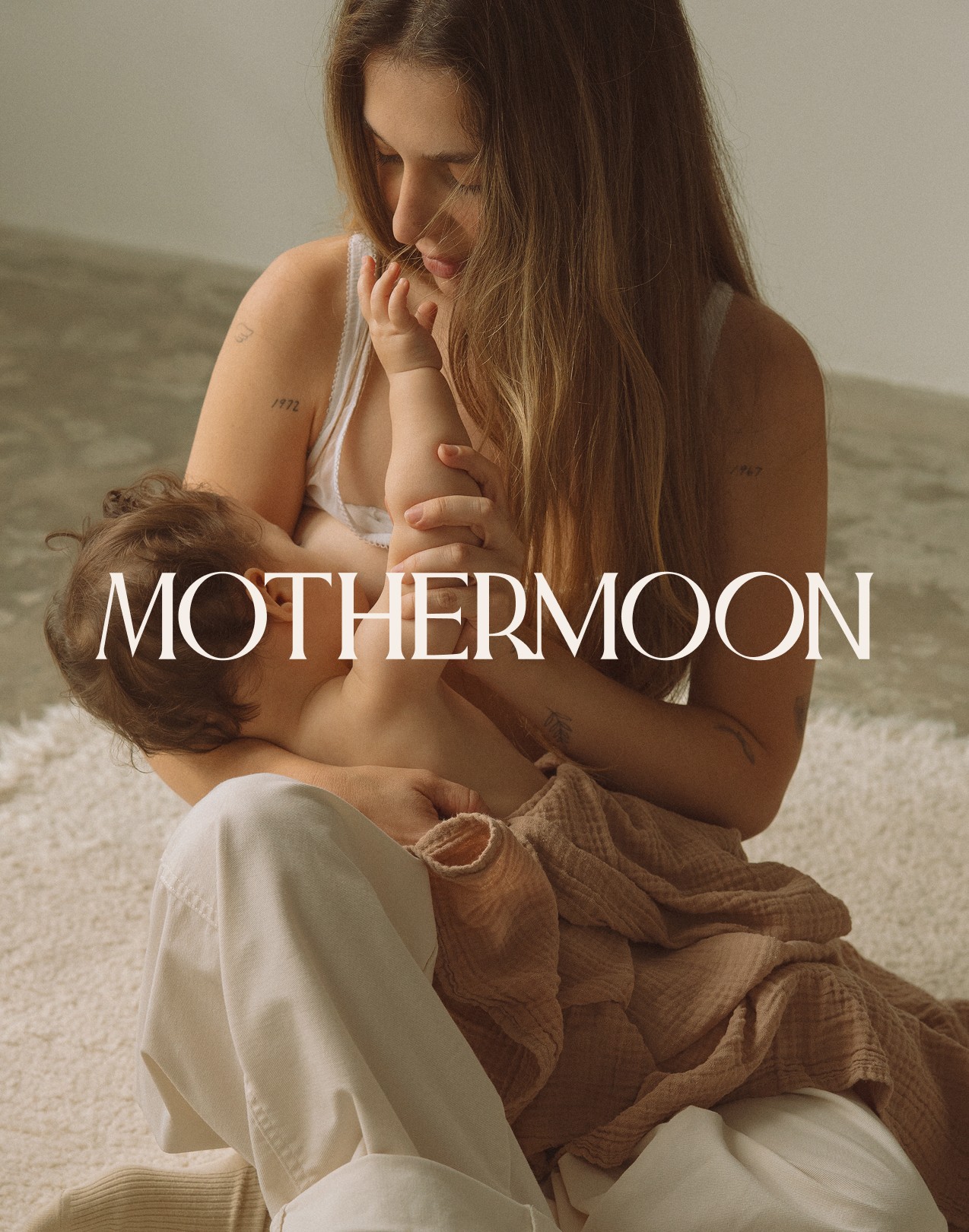
Then comes the whispery tone of voice. A woman wrapped in muslin, colour-graded to the exact shade of a latte, staring into the middle distance like she's just remembered she left something on the stove in a past life.
And every time I think the same thing: this is not what motherhood looks like.
It's not a taste problem — I want to be clear about that. It's a design problem, a culture problem, and the part nobody wants to hear, a business problem. Because the woman this branding is built for doesn't actually exist. The branding world invented her.
Let me show you the real one.
The actual customer is a full-grown adult
Quick reality check. With numbers, because I like numbers.
Average age of a first-time mother in Germany: 31.3 (DESTATIS). In Berlin and the big cities: 34–36. UK: 30.9 (ONS). US: 30.3 (CDC).
We are not designing for nervous 22-year-olds figuring out who they are. We're designing for women in their thirties and forties who are deep into their careers, have money to spend, and make up to 85% of household buying decisions. Who have strong opinions. Who have taste. Who are, frankly, too busy for this.
This is one of the most commercially powerful audiences on the planet.
And we hand them lavender and a "self-care moment."
It's patronising. Let's just say it.
Why the soft stuff sells (and why that's a trap)
In fairness, there's a reason. "Gentle" branding tests well. Soft visuals lower perceived risk. Pastels read as innocent. Simple language drops the cognitive load. Neutral feels safe.
So the industry optimised for safe. Fine.
But somewhere in the last decade we slid from comforting to condescending and didn't notice the line go past. It stopped being soothing and started being infantilising.
We don't say "here's a brilliant product for you." We say "shhh, sweetheart, we made this for you, don't worry your head — how's the baby?"
It's a hangover from an era that expected women to shrink the moment they became mothers.
Here's the thing though: mothers aren't shrinking. You don't become less of yourself when you have a kid. Society would love you to but you don't.

The two clichés I'd retire tomorrow
After working with a pile of clients in this space, I can tell you almost all "motherhood branding" is one of two things.
One: the Beige, Boho, Blissful Mum. Oatmeal everything, sun-flares, slow mornings, softness in all directions. Looks calm. Looks romantic. Looks like a curated Pinterest morning. Looks nothing like a Tuesday.
Two: the Cutesy, Childlike Mum. Pastels, doodles, cartoon illustrations, "mama" written like a picture book. And here's what's actually going on in this one — the mother gets visually merged with the baby. It's not motherhood branding. It's baby branding in bigger sizes.
That second one genuinely winds me up, because of what it quietly says: your identity doesn't matter, you're just the delivery system for your child.
No.
Motherhood is a phase, not a personality
This is the mistake we keep making. We treat motherhood like a personality type instead of a season of someone's life.
She still has a career. Ambition. Taste. Goals. Boundaries. A brain. A whole complicated inner life that did not evaporate in the delivery room.
But the branding flattens all of it into one archetype: soft, selfless, neutral, gentle caregiver.
Notice it next time. The moment a brand decides a woman is pregnant, the tone shifts. Confident and fun becomes soft and pacifying. Suddenly she's assumed to be delicate and a little confused.
Why? She didn't get less capable. She got a baby.
This is also just bad business
Let's talk money, because someone has to.
Mothers drive an enormous chunk of consumer spending — food, beauty, wellness, home, healthcare, lifestyle, kids' everything. Enormous.
And brands leave a lot of it on the table by flattening her, pandering to a stereotype, and acting like motherhood is the only lens she views life through.
The brands that talk to her like the grown adult she is? They win. Respect earns trust. Trust earns loyalty. Loyalty earns purchasing power. It really isn't complicated.
So what should it actually look like
Here's my take, after years designing in beauty, wellness, lifestyle and motherhood-centred brands:
Respect the woman first. She didn't disappear when she gave birth.
Drop the baby-talk. No "mama needs a moment" slogans, unless you're being deliberately ironic.
Lead with clarity and competence. She does not have time to decode diluted messaging.
Build aesthetics that match who she actually is. Premium, modern, confident. Not neutral because neutral felt safe.
Tell the truth about the emotion. Motherhood is messy, funny, overwhelming, joyful, contradictory. Honest beats saccharine every single time.
Build for more than one dimension. She is not only a mother. Don't design like she is.
Give her grown-up visual language. It can be soft — if soft means something. Bold, if bold is true. Minimal, editorial, warm, loud — anything, as long as it's an actual choice.
The one thing it should never be is reductive.
One last thing
Brands teach a culture how to see people. That's the real job, whether we admit it or not.
And right now, the branding around motherhood is teaching the world to see mothers as smaller than they are.
But they're not small. Not beige. Not fragile. Not a monolith.
They're grown, sharp, complicated women navigating one of the most demanding seasons of a life.
So build the brand that grows up with them.
If you're building a brand in the motherhood space and you're tired of the pastels — we should talk.